02.11.2026 The World Today - What Actually Changed
1. 02.11.2026 The World Today
1) A real (and messy) “peace timeline” is being floated for Ukraine
What happened? Reporting indicates a U.S.-pushed timetable aiming for a Russia–Ukraine peace deal by June 2026, with Ukrainian elections and a referendum on a peace deal discussed on a tight timeline (mid-May mentioned), and a possible formal announcement window around Feb 24. (Financial Times)Why it matters (plain language): This is the first clear sign in a while that political deadlines—not battlefield events—may start driving decisions. Deadlines can force compromises, but they also create incentives for sabotage (on the ground, online, and inside politics).Who gains / loses:
- Gains: Whoever can define “peace” in a way their public accepts—Washington (if it can claim progress), Kyiv (if it can secure credible guarantees), Moscow (if it can lock in territorial facts).
- Loses: Ukrainians displaced or under fire who can’t vote easily; European capitals sidelined by a U.S.–Russia–Ukraine channel; anyone betting on slow, orderly diplomacy.
2) Europe is trying to reinsert itself into Ukraine endgame leverage
What happened? The EU is moving on two tracks: (a) drafting a list of concessions Europe wants from Russia in any settlement, and (b) the Commission proposing additional sanctions targeting Russian oil trade support (shipping/services) and financial/trade sectors, with a push to align decisions around late February. (Reuters)Why it matters: If Europe is not at the table, it becomes the bill-payer without veto power (reconstruction, refugees, security externalities). This week looks like Europe saying: no signature, no settlement.Who gains / loses:
- Gains: The EU, if it can unify and convert frozen assets/sanctions into bargaining power.
- Loses: Russia, if enforcement tightens on the “shadow fleet” ecosystem; Ukraine, if EU unity fractures and support gets conditional; the U.S., if Europe’s line complicates fast deals.
3) Taiwan’s deterrence is being constrained by domestic politics, not just China
What happened? Taiwan’s leadership warned that delays in passing a proposed ~$40B special defense budget risk a “rupture” in its defense posture; the opposition wants tighter scrutiny/smaller package. Separately, reporting continues to highlight PLA training/behavior shifts—fewer median-line crossings in January but also episodes described as riskier maneuvers during encounters. (Reuters)Why it matters: Deterrence isn’t only weapons—it’s the story of competence and unity you broadcast. Budget gridlock signals to Beijing that Taiwan’s politics can slow military adaptation.Who gains / loses:
- Gains: China, if it can frame Taiwan as politically brittle; Taiwan, if the debate produces smarter spending rather than rushed procurement.
- Loses: Taiwan, if delay creates capability gaps; the U.S. and partners, if aid/sales become hostage to Taiwan’s internal coalition fights.
4) The “Red Sea/Iran” fuse is still lit: diplomacy continues, proxies loom
What happened? Reporting indicates continued U.S.–Iran diplomatic engagement (talks referenced in Oman), while the Red Sea threat environment remains tied to Iran-linked dynamics and Houthi signaling about renewed attacks under certain triggers. (Military Times)Why it matters: Shipping risk is a tax on the real economy. Even without a single dramatic headline, sustained threat forces rerouting, raises insurance, and acts like inflation with a naval accent.Who gains / loses:
- Gains: Iran-aligned groups when they can impose costs cheaply; alternative routes/ports/logistics providers who profit from rerouting.
- Loses: Importers/exporters, consumers (higher prices), and governments trying to keep inflation down.
5) The Arctic is back on the deterrence map—quietly, but concretely
What happened? The UK announced plans to double troop presence in Norway over several years, explicitly framed as deterrence in the Arctic context. (The Guardian)Why it matters: The Arctic is not a movie set. It’s a lane for submarines, sensors, undersea infrastructure, and future shipping/energy competition. When countries put actual troops into cold places, they’re signaling long-term posture.Who gains / loses:
- Gains: NATO’s northern flank coherence; Norway’s role as a strategic anchor.
- Loses: Russia’s freedom to pressure the Nordic/Greenland arc without response; anyone hoping the High North stays “low drama.”
6) Oil policy stays cautious; the message is “we can change supply if we need to”
What happened? OPEC communications show continued coordination and a posture that voluntary cuts can be unwound “subject to market conditions,” with continued scheduled reviews. (OPEC)Why it matters: Markets care less about speeches than the option value of spare capacity and coordinated action. This week’s signal: producers want price stability and flexibility, not a price war.Who gains / loses:
- Gains: Producers with fiscal needs and spare capacity; governments hoping energy doesn’t reignite inflation.
- Loses: Highly leveraged consumers/industries if volatility returns; any producer forced into cheating dynamics.
7) A “middle power” stress test: South Africa’s fiscal credibility gets a spotlight
What happened? The IMF urged South Africa to adopt a clearer debt rule; it cited debt stabilization projections and reform momentum, while warning about slippage risks. (Reuters)Why it matters: Many states are entering a new era where borrowing is no longer cheap and forgiveness is no longer fashionable. Fiscal credibility is becoming a national security asset.Who gains / loses:
- Gains: Reformers inside government if they can lock in rules; investors if discipline lowers risk.
- Loses: Political factions reliant on spending promises; governments that try to “social program” their way out of math.
2. What the Headlines Missed
- Europe’s leverage is not moral; it’s financial plumbing.The EU’s under-discussed power is enforcement over services: shipping, insurance, banking access, and the legal architecture around frozen assets. The sanctions package focus on shipping services is a clue about where Europe thinks Russia is vulnerable. (AP News)
- Taiwan’s most immediate vulnerability may be legislative tempo.Beijing watches capability, yes—but also whether Taiwan can make decisions at the speed of crisis. A delayed budget is a “time-to-adapt” gift to the coercer. (Reuters)
- The Red Sea isn’t a single crisis—it's a standing condition.When threats become chronic, businesses bake the risk into routes and prices. That changes investment patterns in ports, storage, and regional manufacturing—slowly, then all at once. (Military Times)
3. Power, Money, and Pressure
Gaining leverage (this week):
- The EU (potentially): If it can unify, it holds tools (sanctions scope, frozen assets, market access) that matter in any settlement architecture. (Reuters)
- China: Not because it “did something big,” but because Taiwan’s internal friction provides openings for coercion narratives. (Reuters)
- Energy producers with coordination: Flexibility + discipline is leverage when global growth is steady but fragile to shocks. (OPEC)
Losing room to maneuver:
- Ukraine: Because political timelines (votes, referendums) and wartime logistics collide. The tighter the timeline, the more any misstep becomes legitimacy risk. (Financial Times)
- Russia: If enforcement tightens on shipping and financial services and if Europe coordinates demands; but this is contingent on EU unity and enforcement quality. (AP News)
- Trade-dependent importers: Chronic shipping insecurity acts like a persistent cost increase. (Military Times)
Where pressure is building:
- Alliance management: Europe vs U.S. sequencing on Ukraine endgame.
- Domestic legitimacy: Taiwan’s “defense unity” narrative under strain; Ukraine’s wartime governance legitimacy under election pressure. (Reuters)
- Inflation politics: Any shipping/energy volatility immediately becomes election-grade pain.
Confidence vs weakness (behavioral read):
- Confidence: EU trying to define asks; UK reinforcing Arctic posture. (Reuters)
- Reactive: Actors juggling domestic constraints—Ukraine’s election logic under fire; Taiwan’s budget politics under threat narratives. (Financial Times)
4. Commerce, Energy, and the Real Economy
- Shipping risk remains a “shadow tariff.” Even without a single marquee incident, persistent threat pushes rerouting, higher insurance, longer transit times. Consumers feel it as slightly higher prices and less predictable delivery. (Military Times)
- Energy policy is trying to be boring—on purpose. OPEC+ signaling that supply can return gradually if needed is essentially an attempt to manage volatility expectations. (OPEC)
- Sanctions are moving toward service chokepoints. Targeting shipping services around Russian oil is aimed at the ecosystem, not just the barrel. If enforced, it changes behavior—ports, insurers, flags, and middlemen adjust. (AP News)
- Fiscal credibility matters more in a higher-rate world. South Africa’s IMF discussion is one case study in a broader trend: countries that can’t demonstrate discipline will pay more to borrow, leaving less for jobs and services. (Reuters)
5. Conflict and Security — Beyond the Battlefield
- Ukraine: Civilian strikes and the war’s human toll continue, while political timelines introduce escalation incentives (each side may try to shape negotiating psychology). (Al Jazeera)
- High North: UK troop posture in Norway underscores that deterrence is expanding beyond Eastern Europe into the Arctic system. (The Guardian)
- Taiwan Strait: The most important risk isn’t a planned war tomorrow—it’s crisis instability: risky maneuvers + politicized budgets + misread signals. (Reuters)
- Red Sea: Gray-zone maritime pressure remains a lever for actors who can impose costs without fighting a conventional war. (FDD)
6. Society, Legitimacy, and Stability
- Ukraine’s legitimacy puzzle: Elections under wartime conditions raise real procedural and inclusion issues (displacement, security, administration). Even a legitimate result can be attacked as illegitimate—internally or externally. (Financial Times)
- Taiwan’s cohesion signal: The defense budget dispute is a stress test of “national unity” messaging under pressure. (Reuters)
- Middle-power constraint: South Africa’s fiscal debate reflects a broader legitimacy squeeze: voters want services; bond markets want discipline. (Reuters)
7. Narratives, Information, and Perception
- “Peace by June” as a narrative weapon. It can calm markets and publics—or it can become a trap that encourages performative negotiation and blame games when reality resists deadlines. (Financial Times)
- Europe’s narrative shift: From “support Ukraine” to “define the settlement terms and enforcement architecture.” (Reuters)
- Taiwan narrative contest: “Defense necessity” vs “budget scrutiny/sovereignty in decision-making.” Both can be true; the winner will shape deterrence perception. (Reuters)
8. The Deeper Forces at Work
- Debt + rates: Fiscal room is shrinking globally; credibility and rules matter. (Reuters)
- Sanctions as systems engineering: Modern sanctions increasingly target services and networks, not just goods. (AP News)
- Alliance geometry: Ukraine endgame is forcing alignment questions: who guarantees what, who pays, who enforces, who gets veto power. (Reuters)
- Geography returns: Arctic posture and maritime chokepoints are quietly back as first-order constraints. (The Guardian)
Assumptions that look weaker than a year ago:
- That wars wind down cleanly on battlefield logic alone.
- That domestic politics won’t dictate strategic tempo. (They will. They always do. The adults just call it “process.”)
9. Looking Ahead — The Next 1–4 Weeks
Developments most likely (with signals)
- EU bargaining posture hardens into a concrete package (demands + enforcement tools).
- Signal: Member-state agreement on sanctions package scope and explicit conditions list. (Reuters)
- Ukraine political calendar becomes a strategic object (debate, pushback, legitimacy contest).
- Signal: Formal announcements around Feb 24 and operational plans for voting mechanics. (Financial Times)
- Taiwan budget fight intensifies as external pressure meets internal bargaining.
- Signal: Parliamentary timetable changes; U.S./partner messaging; revised package size. (Reuters)
- Red Sea risk remains elevated even absent a singular “big attack.”
- Signal: Shipping advisories, insurance rate moves, explicit threat statements tied to Iran/U.S. dynamics. (FDD)
Low-probability, high-impact risks worth watching
- A Taiwan air/sea incident that produces casualties or loss of aircraft/ship.
- Trigger: Repeated close encounters + political crisis at home + poor deconfliction. (Newsweek)
- Ukraine “deadline sabotage” escalation (strikes timed to shape negotiating psychology).
- Trigger: Peace timeline becomes credible + each side seeks leverage through fear or faits accomplis. (Financial Times)
10. Why This Matters
For ordinary people:
- Shipping insecurity and energy volatility show up as prices and delays, not as dramatic headlines.
- Political timelines in wars can create sudden swings—hope one week, fear the next.
For businesses and investors:
- Treat maritime risk as a persistent operating condition, not a temporary shock.
- Watch sanctions that target services—those can change counterparties and compliance costs overnight. (AP News)
For governments and institutions:
- The next phase of Ukraine isn’t just weapons—it’s legitimacy, sequencing, and who guarantees what.
- Taiwan deterrence depends on decision speed and political cohesion as much as hardware.
What to watch more closely:
- Whether Europe converts financial leverage into unified bargaining power.
- Whether “peace timelines” become real operational plans or just narrative theater.
Spin Delta
- Ukraine framing shifted toward “process milestones” (elections/referendum/timetables) rather than battlefield-only logic. (Financial Times)
- Europe’s framing shifted from “support” to “terms.” That’s a real move from moral posture to power posture. (Reuters)
- Taiwan’s story is increasingly about internal tempo (budget and unity) as a component of deterrence. (Reuters)
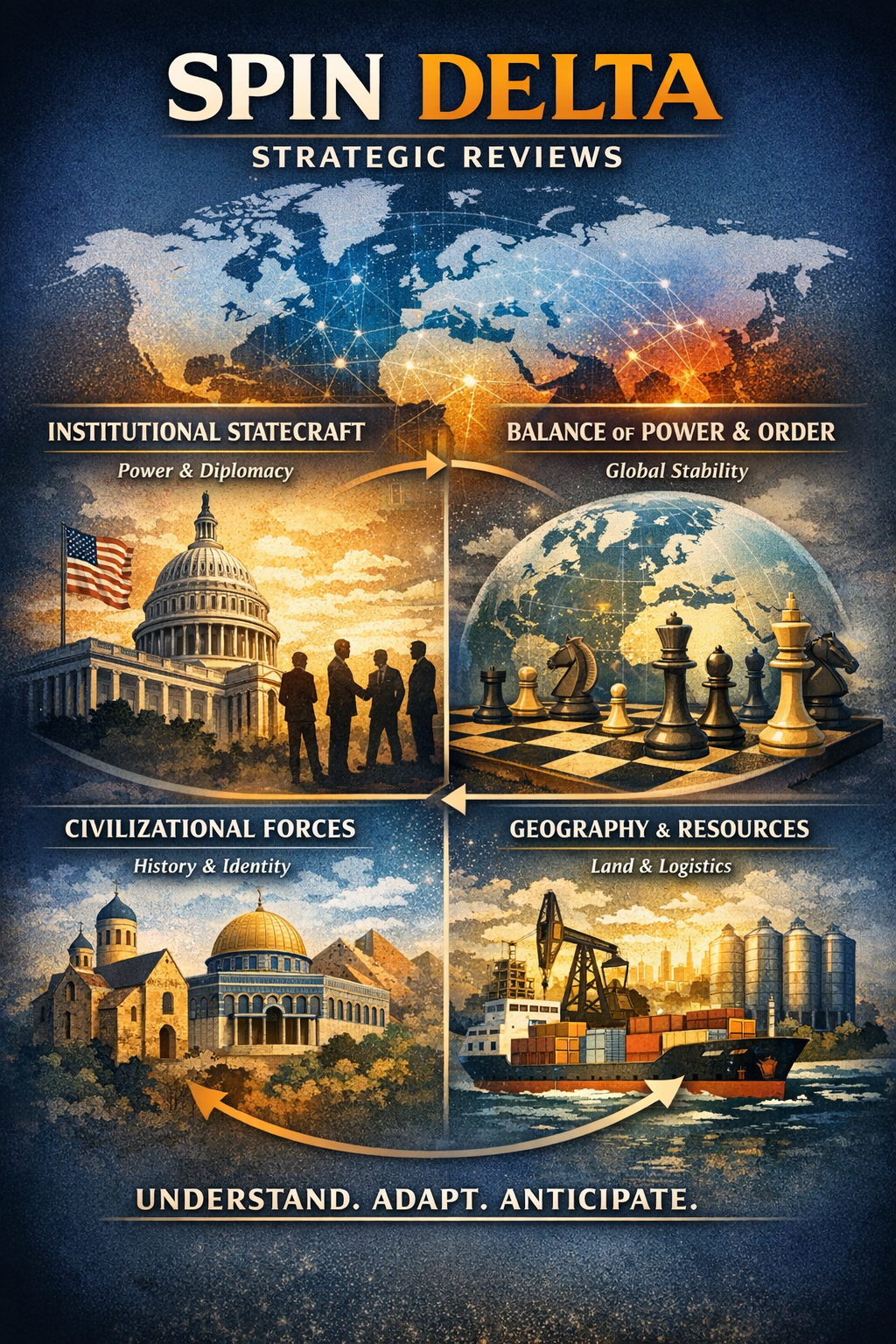
Strategic Review Module — Four Analytic Lenses (Research-Grade, Original)
Below is a second, independent critique of the weekly brief above—not written in anyone’s personal voice, and with uncertainty explicitly flagged.
Lens 1 — Institutional Statecraft (Secretary of State Perspective)
What matters most for U.S. interests + alliance cohesion
- Ukraine endgame sequencing risk: A rushed political timetable can fracture coalition unity if Europeans feel bypassed or if Ukrainian legitimacy is questioned. (Financial Times)
- EU leverage integration: Europe is attempting to define demands and sanctions architecture; U.S. diplomacy must integrate that or risk parallel strategies. (Reuters)
- Taiwan deterrence credibility: Budget delay is a visible signal adversaries can exploit; U.S. messaging must avoid looking like it’s “picking sides” in Taiwan’s domestic politics while still urging capability acceleration. (Reuters)
- Red Sea/Iran management: Any escalation spikes global price pressures and distracts from Indo-Pacific priorities. (Military Times)
- Arctic posture coherence: UK move is helpful, but U.S. should ensure it nests into NATO planning and does not become symbolic without sustainment. (The Guardian)
Feasible policy options (and bureaucratic limits)
- Ukraine:
- Options: Align U.S.–EU negotiating posture; clarify what “security guarantees” mean (capabilities, training, intelligence sharing, long-term funding mechanisms).
- Limits: Domestic political bandwidth; differing EU member risk tolerance; Ukraine’s constitutional and wartime legal constraints on elections. (Confidence: Medium—details not fully visible in sources.) (Financial Times)
- Taiwan:
- Options: Quiet technical assistance on prioritizing spend; public messaging focused on resilience, not partisan pressure; expand multilateral exercises/coordination signals.
- Limits: Risk of backlash if perceived as interference; legislative independence. (Confidence: High that optics matter; Low–Medium on what will move votes.) (Reuters)
- Red Sea/Iran:
- Options: De-escalation channel preservation; maritime coalition burden-sharing; clear conditional deterrence statements tied to specific acts.
- Limits: Proxy autonomy; misperception; domestic pressure after incidents. (Confidence: Medium.) (Military Times)
Deliverables
Top 5 strategic priorities
- Prevent Ukraine coalition fracture by integrating EU leverage into any timeline.
- Define a credible guarantees menu for Ukraine that survives politics.
- Stabilize Red Sea shipping risk to reduce global economic drag.
- Support Taiwan deterrence by increasing decision tempo without overt political interference.
- Ensure NATO’s High North posture is resourced, not just announced.
Alliance & alignment map (interests, not values)
- EU core states: interest = enforcement leverage, financial stability, border security, credibility of sanctions. (AP News)
- Ukraine: interest = survival + guarantees + legitimacy maintenance. (Financial Times)
- U.S.: interest = end war on terms that deter repetition, avoid inflation shocks, preserve Indo-Pacific focus. (Inference; confidence Medium.)
- UK/Nordics: interest = Arctic deterrence + NATO credibility. (The Guardian)
- Taiwan + U.S./partners: interest = deterrence credibility, supply chain stability, avoiding crisis spiral. (Reuters)
Risk register
- R1: Peace-timeline backlash in Ukraine
- Trigger: perceived coerced referendum/election mechanics under war.
- Mitigation: transparent sequencing, monitoring support, flexible deadlines.
- R2: EU–U.S. negotiating split
- Trigger: EU conditions list conflicts with U.S. quick-deal aims. (Reuters)
- Mitigation: joint working group on concessions/enforcement.
- R3: Taiwan incident escalation
- Trigger: risky encounters + political stress. (Newsweek)
- Mitigation: deconfliction messaging, readiness posture, quiet capability acceleration.
- R4: Red Sea shock
- Trigger: major attack causing casualties/shipping halt. (FDD)
- Mitigation: convoy/ISR, diplomatic channel preservation, clear deterrence.
Lens 2 — Balance of Power & Order (NeoConservative 20th Century Framework)
Balance-of-power snapshot (this week)
- Europe is trying to convert economic weight into strategic weight. If successful, it becomes a co-author of European order rather than a donor. (Reuters)
- Ukraine war is drifting toward a negotiation over “facts + guarantees + legitimacy.” The battlefield remains decisive, but the political calendar is becoming the lever. (Financial Times)
- Indo-Pacific deterrence remains a contest of tempo and signal discipline. Taiwan’s domestic budget friction is a form of strategic drag. (Reuters)
Credibility of deterrence + emerging red lines
- Red line ambiguity risk (Taiwan): When intercept behavior is risky, the “red line” becomes accidental rather than deliberate. (Newsweek)
- Red line clarity attempt (EU): A concessions list is an effort to define what “peace” must include, turning vague moral preference into bargaining demands. (Reuters)
Likely bargaining frameworks (flashpoints)
- Ukraine:
- Possible framework: ceasefire/armistice mechanics + phased sanctions relief + security guarantees + asset leverage + humanitarian demands (children/POWs). (Reuters)
- Key uncertainty: whether Russia trades anything material for partial normalization. (Confidence: Low–Medium—intent opaque.)
- Red Sea/Iran:
- Framework: tacit rules of the road (shipping constraints) tied to sanctions/pressure relief—often indirect and deniable. (Military Times)
Order vs fragmentation assessment
- Order: Strengthens if EU–U.S. align and embed enforceable terms.
- Fragmentation: Strengthens if timelines force a “paper peace” without enforcement, leading to renewed conflict later.
Lens 3 — Civilizational & Historical Forces (Historian-based Framework)
Where rational-actor models are insufficient
- Ukraine: Voting during war isn’t just procedure—it’s identity, trauma, and legitimacy myth-making. The act of a referendum can become a national ritual or a national wound. (Financial Times)
- Taiwan: Defense spending debates are also debates about sovereignty, dignity, and whether the island’s future is decided internally or externally. (Reuters)
- EU posture: Europe’s insistence on concessions reflects historical memory: wars end badly when aggressors retain narrative victory and capacity. (Reuters)
Deliverables
Narrative map by region
- Europe/Ukraine: “Justice and survival” vs “fatigue and closure” vs “order and deterrence.” (Financial Times)
- China/Taiwan: “Unity and rejuvenation” vs “self-rule and resilience,” with legitimacy battles fought through domestic institutions. (Reuters)
- Middle East/Red Sea: “Resistance” narratives paired with sovereignty and humiliation themes; maritime pressure becomes symbolic theater and real leverage. (FDD)
- Global South fiscal politics: “Dignity through development” colliding with “discipline through rules.” (Reuters)
Cultural fault lines & pressure points
- Legitimacy under constraint: Elections under war (Ukraine).
- Institutional trust: Legislative paralysis under external threat (Taiwan).
- Memory politics: Europe’s fear of repeating failed settlements. (Reuters)
Societal cohesion vs fracture indicators
- Ukraine: cohesion may hold, but legitimacy contest risk rises with rushed timelines. (Confidence: Medium.) (Financial Times)
- Taiwan: cohesion tested by politicized defense tempo. (Confidence: High on “tested,” Low on outcome.) (Reuters)
Lens 4 — Geography, Demography & Constraints (Global markets-based Framework)
Constraint ledger (hard limits shaping outcomes)
- Geography (Taiwan): Island defense is unforgiving; tempo matters; budgets that delay procurement delay physical capability. (Reuters)
- Chokepoints (Red Sea): Maritime risk concentrates at narrow lanes; even partial disruption taxes global trade. (Military Times)
- High North: Arctic operations require sustained logistics and training; announcements are cheap, sustainment is expensive. (The Guardian)
- Fiscal math (South Africa): Debt dynamics constrain state capacity; rules are attempts to bind future politics. (Reuters)
- Energy flexibility: OPEC+ coordination is a constraint manager for global inflation politics. (OPEC)
Chokepoint watchlist
- Bab el-Mandeb / Red Sea approaches (shipping risk persistence). (Military Times)
- Taiwan Strait air/sea encounter zones (crisis instability). (Newsweek)
- Arctic/Norwegian operating environment (undersea and proximity dynamics). (The Guardian)
Relative resilience assessment (near-term)
- Higher resilience: EU (if unified), energy producers with coordinated policy. (AP News)
- Lower resilience to shocks: Trade-dependent importers; politically divided deterrence actors under pressure (Taiwan). (Reuters)
Integrity & Error-Check Pass (Mandatory)
Factual integrity check
- Major factual claims were anchored to current reporting (Ukraine election/peace timeline; EU sanctions/concessions; Taiwan defense budget delay; UK Norway troops; OPEC+ posture; IMF South Africa; U.S.–Iran talks/Red Sea threat framing). (Financial Times)
- Uncertainty flags:
- The full details of any U.S. peace plan and enforceability remain unclear beyond reported timelines. (Confidence: Low–Medium.) (Financial Times)
- Red Sea “likelihood” language is sourced indirectly through reporting; real operational intent is hard to verify publicly. (Confidence: Medium.) (FDD)
Internal consistency check
- The brief treats “peace timeline” as a narrative + incentive-shaper, not as a guaranteed outcome.
- Taiwan assessment consistently distinguishes capability from decision tempo and signaling.
Confidence tagging (major conclusions)
- High: EU is actively moving to define demands/sanctions architecture. (Reuters)
- High: Taiwan defense budget delay is a salient deterrence signal under dispute. (Reuters)
- Medium: Ukraine political timetable will meaningfully shape near-term strategic behavior. (Financial Times)
- Medium: Red Sea risk acts as a persistent “cost layer” even without a marquee incident. (Military Times)
- Medium: Arctic posture is re-solidifying as a NATO planning lane (signal is clear; magnitude depends on follow-through). (The Guardian)
Bottom Line (3 forecasts with horizons + triggers)
- (1–4 weeks) Europe will attempt to formalize a negotiating “ask set” toward Russia and pair it with additional sanctions enforcement planning.
- Trigger: EU member-state consensus on the concessions list + sanctions package adoption path. (Reuters)
- Confidence: Medium–High.
- (1–4 weeks) Ukraine’s internal political calendar will become a contested strategic object—debated domestically and targeted informationally.
- Trigger: Formal announcement and operational election/referendum planning steps. (Financial Times)
- Confidence: Medium.
- (1–4 weeks) Taiwan’s deterrence story will hinge on whether budget politics resolve into a credible spend plan; external actors will amplify whichever narrative wins.
- Trigger: Parliamentary timetable action and revised budget scope. (Reuters)
- Confidence: Medium.
Would a smart high-school senior understand this—and come away better informed about the world?