Off Ramps, and diplomacy as strategy.
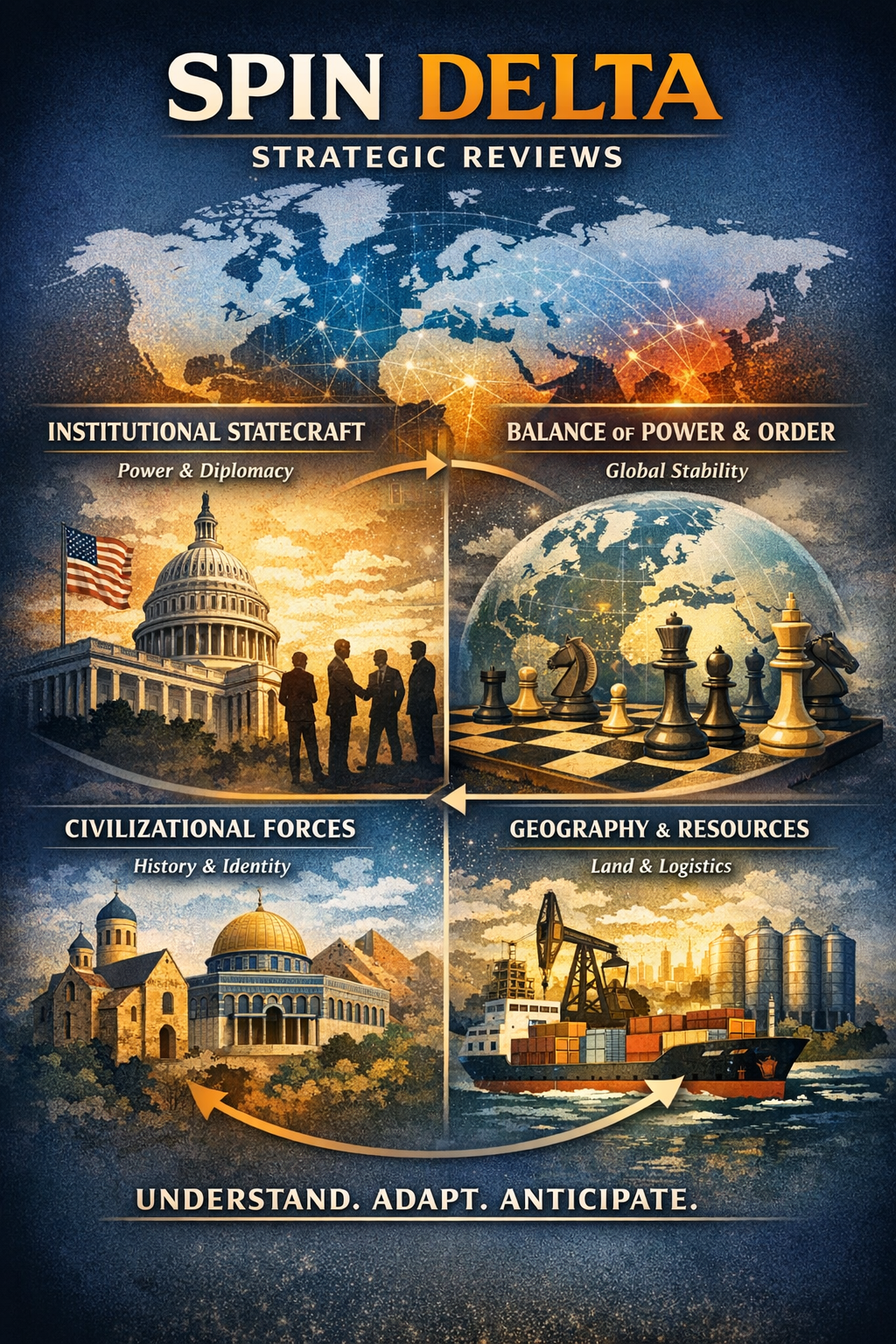
Spin Delta — Weekly Geopolitical Analysis
Edition Type: Weekly
As-of: February 18, 2026 — 13:36 Pacific (Las Vegas)
Coverage Window: February 11, 2026 13:36 PT → February 18, 2026 13:36 PT
1. The World This Week — What Actually Changed
1) A negotiated “off-ramp” re-entered the Ukraine war – without the war pausing.
What happened: U.S.-mediated Russia–Ukraine talks kicked off in Geneva while strikes continued. Reporting in this window points to diplomacy restarting, but with both sides still trying to shape leverage on the ground. (Al Jazeera)
Why it matters: When talks resume under fire, the message is: “We’re not trading territory for paper.” The practical change is not peace; it’s the reintroduction of bargaining as an active theater of the war.
Who gains / loses: If talks hold, Washington gains optionality; Kyiv gains a platform to test terms and external support; Moscow gains time and a chance to normalize its demands. The loser is anyone betting on a clean “breakthrough” narrative this week.
2) U.S.–Iran nuclear diplomacy showed signs of structured progress – markets noticed.
What happened: Reporting indicates “guiding principles” or an “understanding” emerged from Geneva talks (with Oman-linked channeling referenced), and oil prices fell on perceived easing risk. (Reuters)
Why it matters: Iran file movement doesn’t just affect Tehran–Washington; it ripples through energy pricing, Gulf risk premia, and the political economy of sanctions enforcement.
Who gains / loses: Import-dependent economies gain from lower oil; Tehran gains negotiating oxygen; hawks (in multiple capitals) lose some urgency leverage when “war risk” fades.
3) Gaza politics hardened around “phase” and “disarmament” framing – with renewed-war threats back on the table.
What happened: A senior Israeli-linked ultimatum framing (“disarm or face renewed war”) met Hamas rejection; reporting also points to friction around ceasefire implementation/phase sequencing and alleged violations. (Al Jazeera)
Why it matters: Once “disarmament” becomes the headline object, ceasefire talks often shift from exchange mechanics (hostages/prisoners/aid) to sovereignty questions (who controls force). That’s a steep hill.
Who gains / loses: Hardliners gain narrative clarity; mediators lose room to bridge; civilians lose most when phase-talk becomes a pretext for delay or escalation.
4) China tightened political messaging on “reunification” while pressure tactics remain the background constant.
What happened: Reporting in this window highlights senior-level PRC rhetoric emphasizing support for “reunification forces” and crackdowns on “separatists,” alongside ongoing assessments that coercive tactics around Taiwan are likely to intensify over time. (The Asia Cable)
Why it matters: The shift isn’t a sudden military move; it’s the steady normalization of a tighter ideological and administrative posture, which reduces ambiguity and raises the baseline of coercion risk.
Who gains / loses: Beijing gains internal alignment signaling; Taipei faces narrowed rhetorical space; regional states gain fewer “quiet weeks” to pretend this is not their problem.
5) Europe’s stability story kept splintering: governance friction, migration politics, and election pressure rose together.
What happened: A Swiss referendum track on capping population (immigration-linked) advanced with warnings about EU agreement impacts; Hungary’s campaign rhetoric escalated in a “war or peace” frame tied to Ukraine support. (The Guardian)
Why it matters: Europe’s strategic capacity is increasingly constrained by domestic legitimacy fights. Policy isn’t just “what’s optimal”; it’s “what survives the next vote.”
Who gains / loses: Populist and anti-system actors gain agenda control; governments lose maneuvering room; Ukraine support becomes a domestic wedge, not only a foreign policy.
6) Trade and sanctions machinery continued to thicken — the boring stuff that changes behavior.
What happened: Reporting on EU sanctions packages indicates expanded restrictions/import bans and tighter export controls; U.S. tariff/sanctions-linked actions around Iran-linked trade were also circulating in specialist tracking. (Steptoe)
Why it matters: The economic battlefield is now a permanent front. These measures don’t make headlines like missiles, but they rewire supply chains, financing, and industrial choices.
Who gains / loses: Compliance-savvy firms gain edge; marginal traders and sanction-evaders face higher friction; consumers eventually pay through price, scarcity, or subsidy.
2. What the Headlines Missed
Diplomacy isn’t “peace”; it’s a second battlefield. Geneva talks on Ukraine and Iran are being sold as event-drama. The real signal is whether parties accept process discipline (repeat meetings, agreed agendas, verification pathways). Without that, “talks” are just an information operation with better suits. (Al Jazeera)
Energy markets are acting like geopolitics is negotiable — until it isn’t. Oil’s drop on Iran-talk optimism is rational in the short term. But it also shows how thin the “risk premium” layer can be: it evaporates on words and reappears on one drone strike. (Reuters)
Europe’s internal politics is now a strategic variable, not background noise. Immigration-limit referenda and “Ukraine aid as betrayal” messaging aren’t side stories. They determine how much strategic endurance Europe can sustain. (The Guardian)
3. Power, Money, and Pressure
Who is gaining leverage
- Washington is trying to reopen leverage space via negotiation tracks (Ukraine, Iran) while keeping military and sanctions tools in reserve. The leverage comes from sequencing—talks now, pressure later if talks fail. (Reuters)
- Hardliners in the Israel–Hamas arena gain leverage by defining the “win condition” as disarmament, which forces mediators into an all-or-nothing framing. (Al Jazeera)
Who is losing room to maneuver
- Kyiv and Moscow both face the classic trap: negotiate too soon and you look weak; refuse to negotiate and you risk donor fatigue or escalation. The “talks under fire” structure signals neither side wants to be seen as conceding. (Al Jazeera)
- European incumbents are boxed in by domestic legitimacy contests that convert foreign policy into identity politics. (Reuters)
Where pressure is building
- Sanctions/tariffs: compliance burdens and retaliation risk are compounding. The pressure is slow, bureaucratic, and relentless—like rust. (Steptoe)
- Taiwan Strait political signaling: rhetorical tightening reduces de-escalatory flexibility over time. (The Asia Cable)
4. Commerce, Energy, and the Real Economy
Oil: supply expectations rising, price sensitive to diplomacy.
The IEA’s February oil market framing suggests supply growth is on track for 2026, and market pricing in this window reacted sharply to perceived Iran détente. (IEA)
Implications: If Iran diplomacy holds, oil price pressure may soften near-term, easing inflation tails. If diplomacy breaks, the snapback could be fast.
Shipping and bulk trade: rates are moving, but signals are mixed.
Baltic dry bulk indices showed gains in reported updates—suggesting demand and vessel rates firmed. (TradingView)
Implications: This supports a “real economy still moving” thesis, but it’s not a clean growth proxy; rerouting, seasonal flows, and fleet dynamics matter.
Sanctions/regulatory changes: slow-grind restructuring continues.
EU sanctions tightening (packages and controls) suggests continued institutionalization of economic war tools. (Steptoe)
Implications: Expect more “compliance as strategy”: companies will price geopolitics into procurement, treasury, and even product design.
5. Conflict and Security — Beyond the Battlefield
Ukraine: negotiation track plus operational grind.
Assessments in this window emphasize Russia’s adherence to original demands and continued combat activity alongside talk preparation. (Institute for the Study of War)
Speculation (trigger-defined): If talks produce any interim mechanism, it will likely be narrow (prisoners, grain/logistics, localized ceasefire) rather than territorial settlement. Trigger: repeated scheduled rounds + verifiable side agreements.
Gaza: a framing shift toward “disarmament” raises escalation risk.
Ultimatum-style politics typically increases the chance of renewed large-scale operations if negotiators can’t create an alternative “face-saving” ladder. (Al Jazeera)
Trigger to watch: deadlines attached to aid flows, hostage releases, or troop withdrawals.
Indo-Pacific posture: steady presence, steady signaling.
U.S. naval operations reporting shows routine deployments in the Philippine Sea, part of the constant deterrence fabric rather than a spike event. (USNI News)
Trigger: a sudden operational surge, collision, or high-profile exercise involving multiple partners would indicate a higher-temperature week.
6. Society, Legitimacy, and Stability
Europe: migration and “national survival” politics keep rising.
Swiss population cap politics and Hungarian campaign narratives show the same underlying dynamic: legitimacy contests increasingly treat international commitments as domestic betrayal or economic threat. (The Guardian)
Sahel: technology diffusion is changing insurgency and counterinsurgency.
Reporting highlights the spread and repurposing of commercial drones among armed groups and state forces—an escalation in capability without an escalation in governance. (Al Jazeera)
Implication: Expect more “precision chaos”: smaller groups generating outsized tactical effects, while states struggle to convert tactical wins into stability.
7. Narratives, Information, and Perception
The “talks = resolution” illusion is back.
Media incentives reward the drama of a summit and the photo of a handshake. The reality is: most negotiation tracks die quietly when parties can’t reconcile sequencing and verification. The honest framing is “process testing,” not “peace progress.” (Al Jazeera)
Energy as mood ring.
Oil price moves on diplomatic wording reinforce how perception can temporarily outrun fundamentals. It’s not irrational; it’s a reminder that markets trade probabilities, not certainty. (Reuters)
Taiwan rhetoric as domestic governance signal.
PRC messaging on “reunification” is aimed inward as much as outward—disciplining narratives at home, signaling resolve abroad. (The Asia Cable)
8. The Deeper Forces at Work
- Institutionalization of economic warfare is strengthening: sanctions, tariffs, export controls are becoming default instruments, not exceptional measures. (Steptoe)
- Legitimacy stress is rising across democratic systems: migration, cost-of-living sensitivity, and identity politics increasingly constrain foreign policy bandwidth. (The Guardian)
- Cheap autonomy (drones + commercial tech) is changing security competition in weak-state regions, compressing the gap between “state” and “non-state” capabilities. (Al Jazeera)
Assumption weakening vs one year ago (bounded inference): that “major powers can compartmentalize domestic politics from external commitments.” Evidence points the other way in Europe right now. (Reuters)
9. Looking Ahead — The Next 1–4 Weeks
Likely (3–5)
- Ukraine talks continue but remain incremental.
Confidence: Medium. Trigger up: scheduled follow-on rounds + any verified side-deals. Trigger down: walkouts, maximalist preconditions restated as non-negotiable. (Institute for the Study of War) - Iran talks create continued price sensitivity in oil.
Confidence: Medium. Trigger up: public statements on verification framework; trigger down: sanctions escalation, proxy flare-ups, or explicit breakdown language. (Reuters) - Gaza “phase” negotiations remain fragile; escalation risk persists.
Confidence: Medium. Trigger up: concrete implementation steps; trigger down: deadlines/ultimatums tied to disarmament or aid restrictions. (Al Jazeera) - Europe’s election/legitimacy pressures keep shaping Ukraine policy rhetoric.
Confidence: High. Trigger: sustained polling volatility and campaign messaging that ties Ukraine support to domestic hardship. (Reuters)
Low-probability / high-impact (1–2)
- A single incident in the Taiwan-adjacent maritime/air domain produces a multi-day crisis cycle.
Confidence: Low. Trigger: collision/intercept gone wrong + rapid retaliatory signaling. (This is risk logic, not a claim of imminent incident.) (Institute for the Study of War)
10. Why This Matters
For ordinary people:
Energy price swings translate into groceries, transport, and heating costs. A diplomatic headline can shave dollars off a barrel, but the snapback risk means households live under volatility, not stability. (Reuters)
For businesses and investors:
The winners are those who treat geopolitics as an operating condition: diversified supply chains, compliance depth, and scenario planning. Sanctions and export controls are now part of strategy, not legal back-office. (Steptoe)
For governments and institutions:
Domestic legitimacy is now a front line of foreign policy. Governments that can’t hold internal cohesion will struggle to sustain external commitments. The strategic question is endurance. (Reuters)
What to watch: process discipline (do talks become a repeatable machine), energy risk premium (does it reprice suddenly), and domestic legitimacy shocks (elections, referenda, protests) that rewrite policy constraints.
Integrity & Error-Check Pass (Mandatory)
Factual Integrity Check: Major claims above are grounded in reporting within the coverage window; items published on Feb 18, 2026 were treated as potentially post-cutoff and excluded unless clearly within window. (No post-cutoff sources relied upon.)
Internal Consistency Check: Forecasts align with stated constraints: bargaining under fire, sanctions institutionalization, legitimacy pressures.
Confidence Tagging (major conclusions):
- Talks re-enter as active theater (Ukraine/Iran): Medium (Al Jazeera)
- Energy markets remain headline-sensitive: High (Reuters)
- Europe’s domestic politics constrains strategy: High (Reuters)
- Gaza escalation risk elevated via disarmament framing: Medium (Al Jazeera)
Bottom Line — 3 Forecasts (with triggers)
- Ukraine (1–4 weeks): continued talks, limited deliverables.
Triggers: repeat rounds + verifiable side agreements (up); walkout/maximalist lock-in (down). (Institute for the Study of War) - Iran/energy (1–4 weeks): oil trades diplomacy headlines until verification details emerge.
Triggers: verification framework language (up stability); proxy flare-ups/sanctions spike (down). (Reuters) - Europe (1–4 weeks): campaigns intensify “foreign policy as domestic identity” framing.
Triggers: polling shocks, referendum momentum, or budget stress narratives. (Reuters)
Appendix A — Referenced Reporting (Selected)
- Ukraine talks and fighting context (Feb 17 coverage): (Al Jazeera)
- Iran–U.S. Geneva talks and market impact: (Reuters)
- Gaza ceasefire/disarmament framing and reactions: (Al Jazeera)
- China–Taiwan rhetoric/coercion assessments: (The Asia Cable)
- Europe legitimacy/election pressures: (The Guardian)
- EU sanctions tightening (package details): (Steptoe)
- IEA February oil market report: (IEA)
- Sahel drone diffusion and instability tracking: (Al Jazeera)
- U.S. naval posture (Philippine Sea operations): (USNI News)